Canciones del Ancla
Lázaro Cristóbal Comala is a Mexican singer-songwriter from the city of Durango. His melancholic music incorporated rhythms like folk, "cardenche", and blues with some influence of Johnny Cash and Bob Dylan. The lyrics speak about loneliness, mental health, and heartbreak with a bit of humor. All of these are located in a city that transpires desert landscapes, surrounded by religious images, but also profanity and old-fashioned bars.
Canciones del Ancla was originally released in 2018. This personal project reimagines the album’s visual identity on its fifth anniversary, exploring how illustration and editorial design can translate a musical world into a cohesive visual system.
Client
Self-iniciated
Role
Concept, Illustration & Vinyl Packaging
Year
2023
Challenge
Designing for music is a process of translation. The brief to create a visual identity for the album that doesn’t literally illustrate the lyrics, but instead reflects the atmosphere, references, and contradictions in Comala’s work: the religiosity and the blasphemy, the melancholy and the dark humor, the desert and the bar.
The only constraint was staying true to the artist. Every decision had to connect back to something real in his music, imagery, or world.
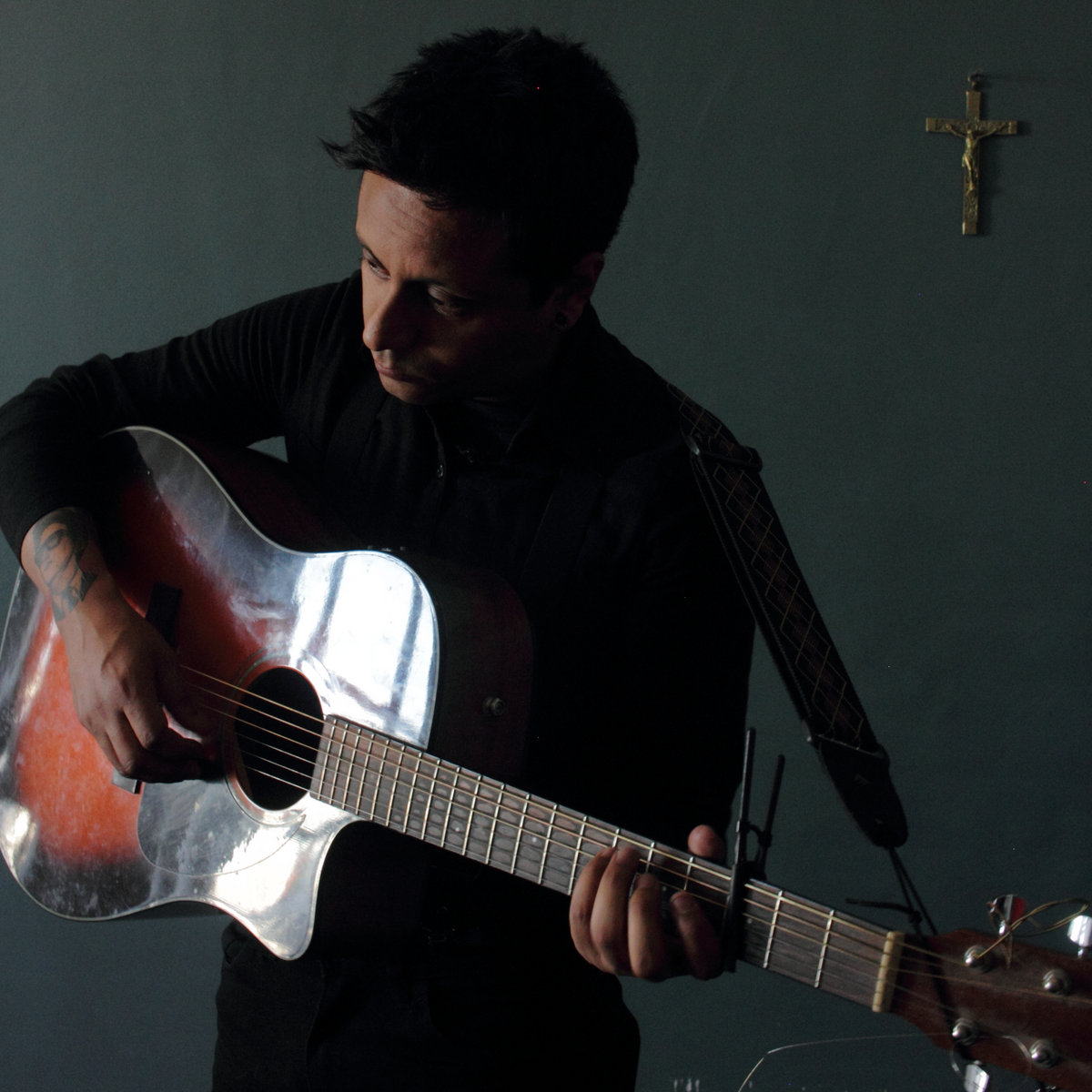
Original album cover from 2018.
Research and references
Before drawing anything, I listened to the album in full and explored his other works and social media presence. I mapped recurring elements: Durango as a character rather than just a location, the consistent use of obscured faces in photographs, and the coexistence of sacred and profane imagery, from the Virgin of Guadalupe to the whiskey bottle within the same frame. I also noted the influence of Johnny Cash and Bob Dylan, both in sound and visual language.
Two main references rose from the research: Caspar David Friedrich’s Romantic landscapes, where nature dominates and the human figure is reduced to scale and atmosphere, absorbed by emotion and environment, and the visual culture of Northern Mexico, where Durango is located: Tex-Mex typography, the checkered tile floors of older homes, and the warm, saturated palette associated with the desert region.
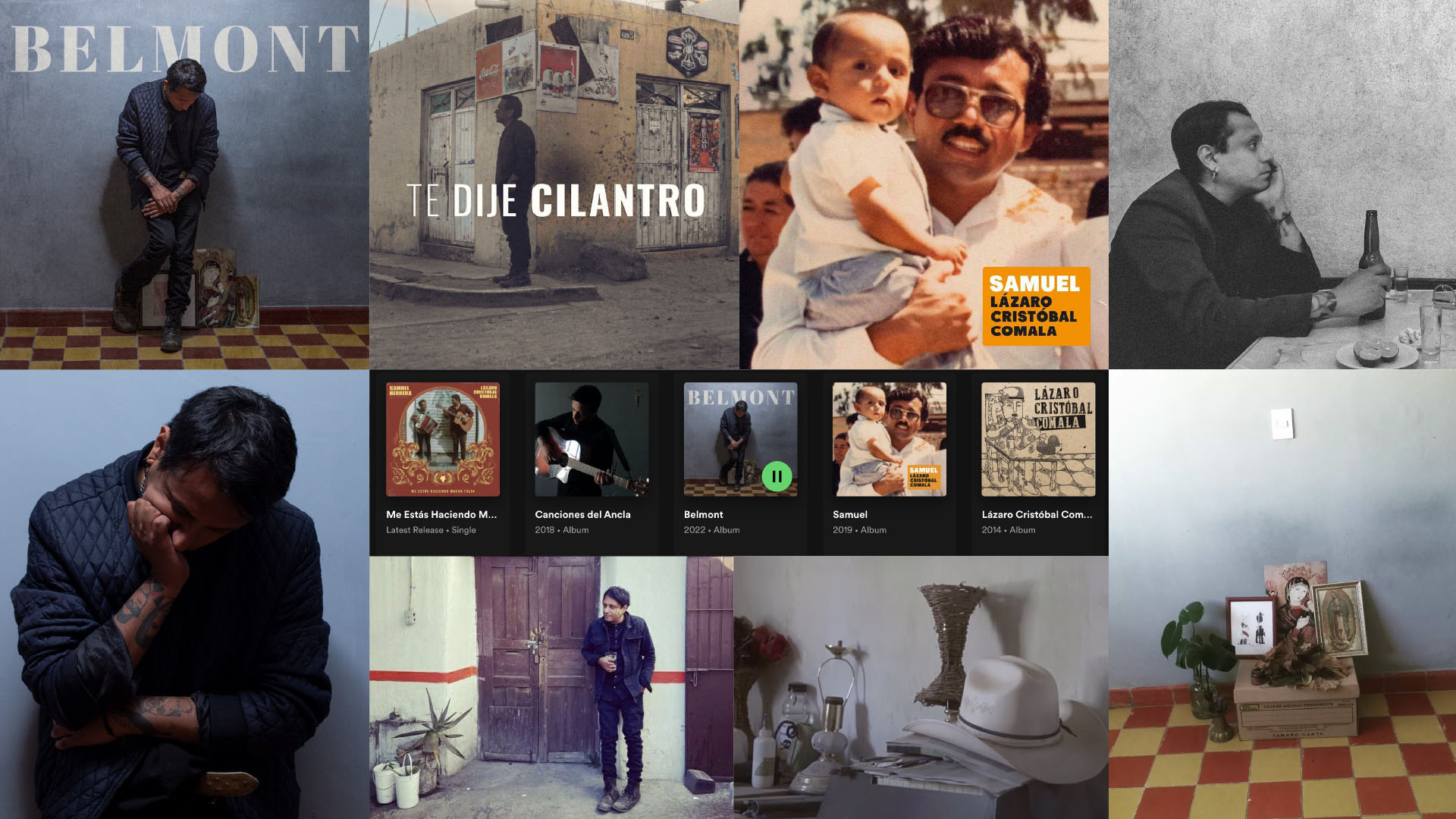
Artist's visual identity
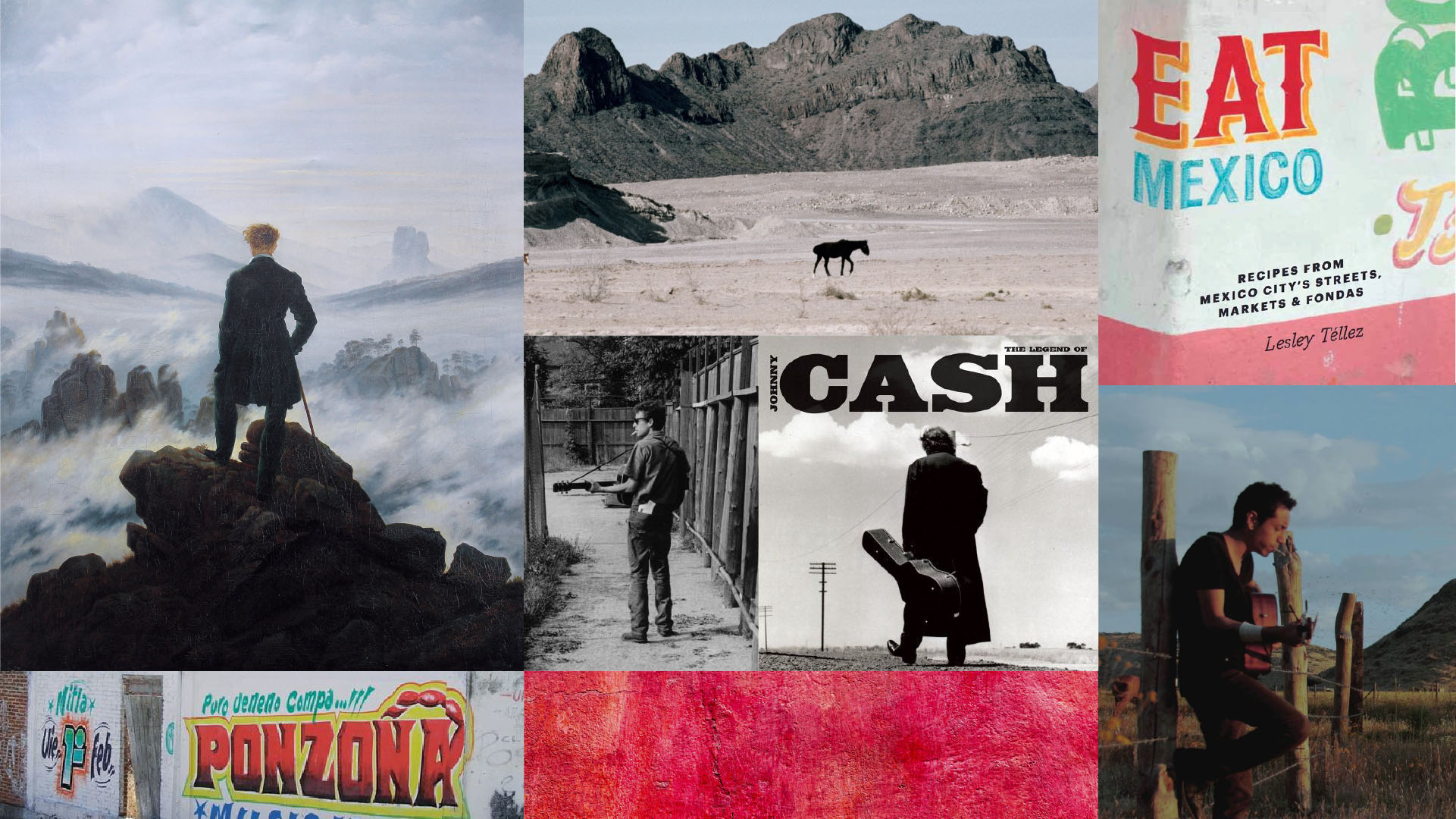
Selected references from the research phase
Concept
Instead of illustrating the album literally, I constructed identity through absence, place, and contradiction, in which landscape, symbols, and fragments of culture serve as stand-ins for character.
Durango functions as both setting and memory, while recurring tensions in the music, sacred and profane, presence and absence, nature and figure, shape the visual system. The result is less a depiction of the artist and more a portrait assembled from what surrounds him, what he references, and what he chooses not to show.
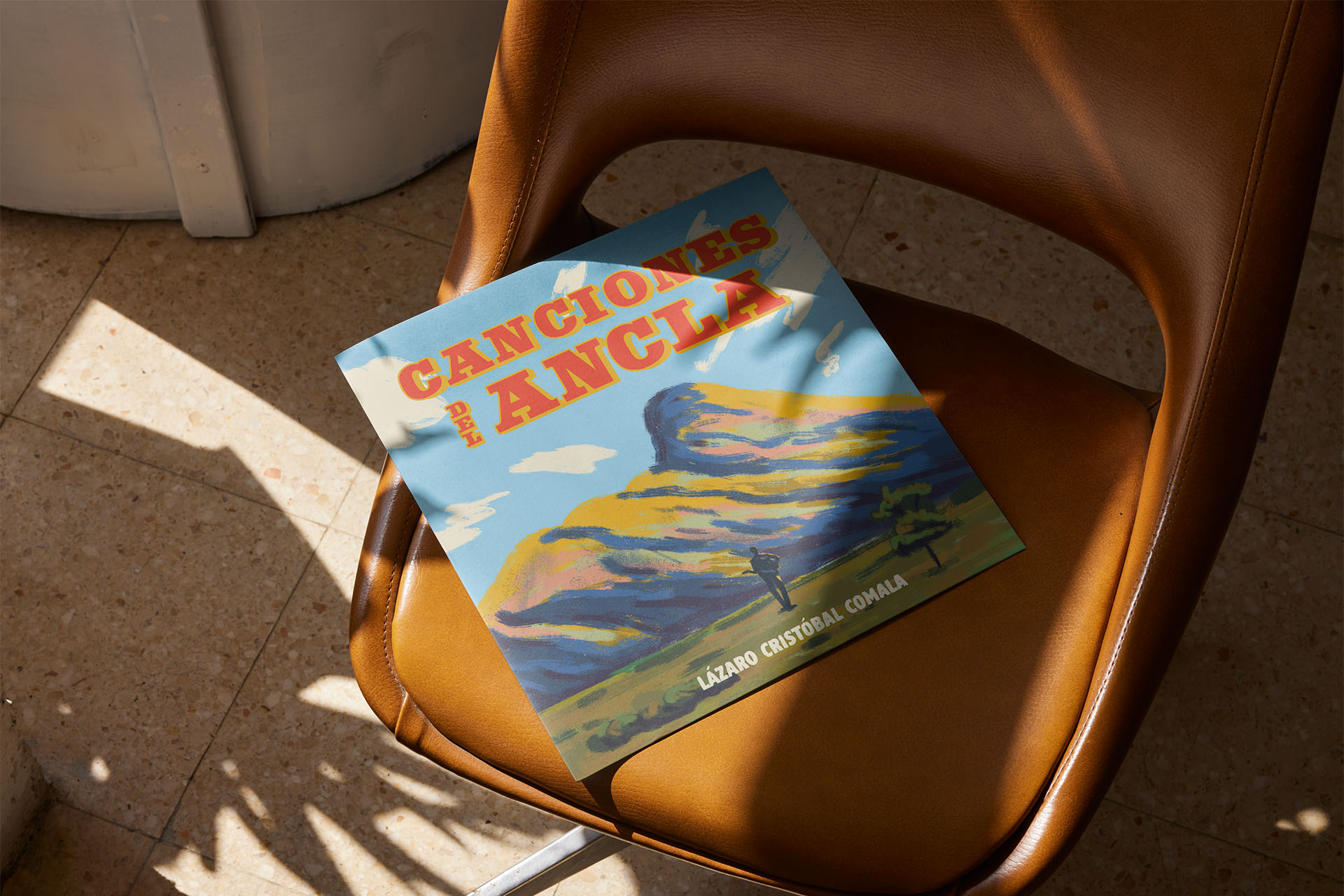
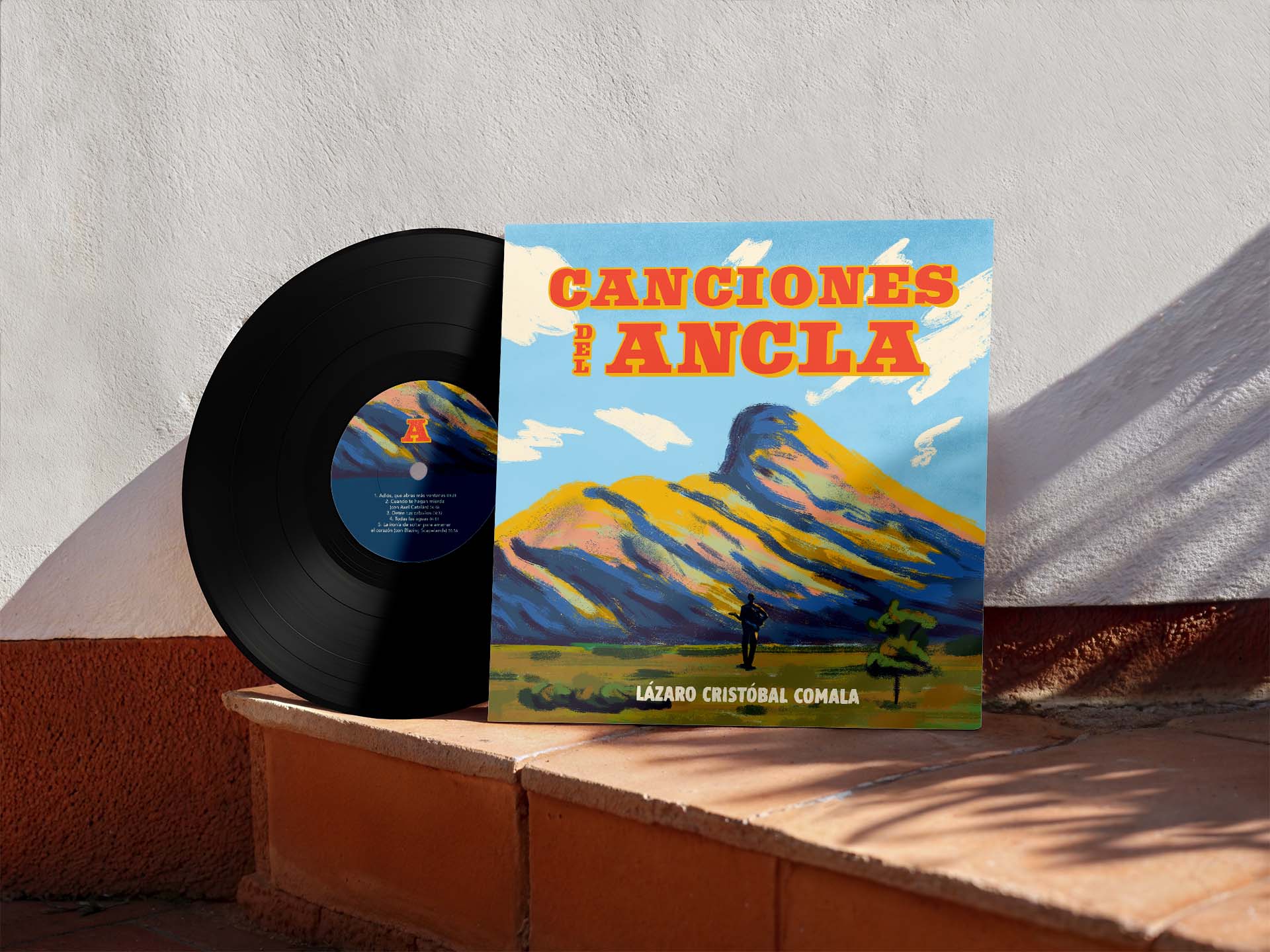
The album is built across four visual layers, each reflecting a different side of the work. The cover places Comala within a landscape inspired by Durango: small in scale, seen from behind, guitar in hand. Nature takes the lead, echoing Friedrich’s landscapes, while the artist's face is never shown, consistent with his own visual identity.
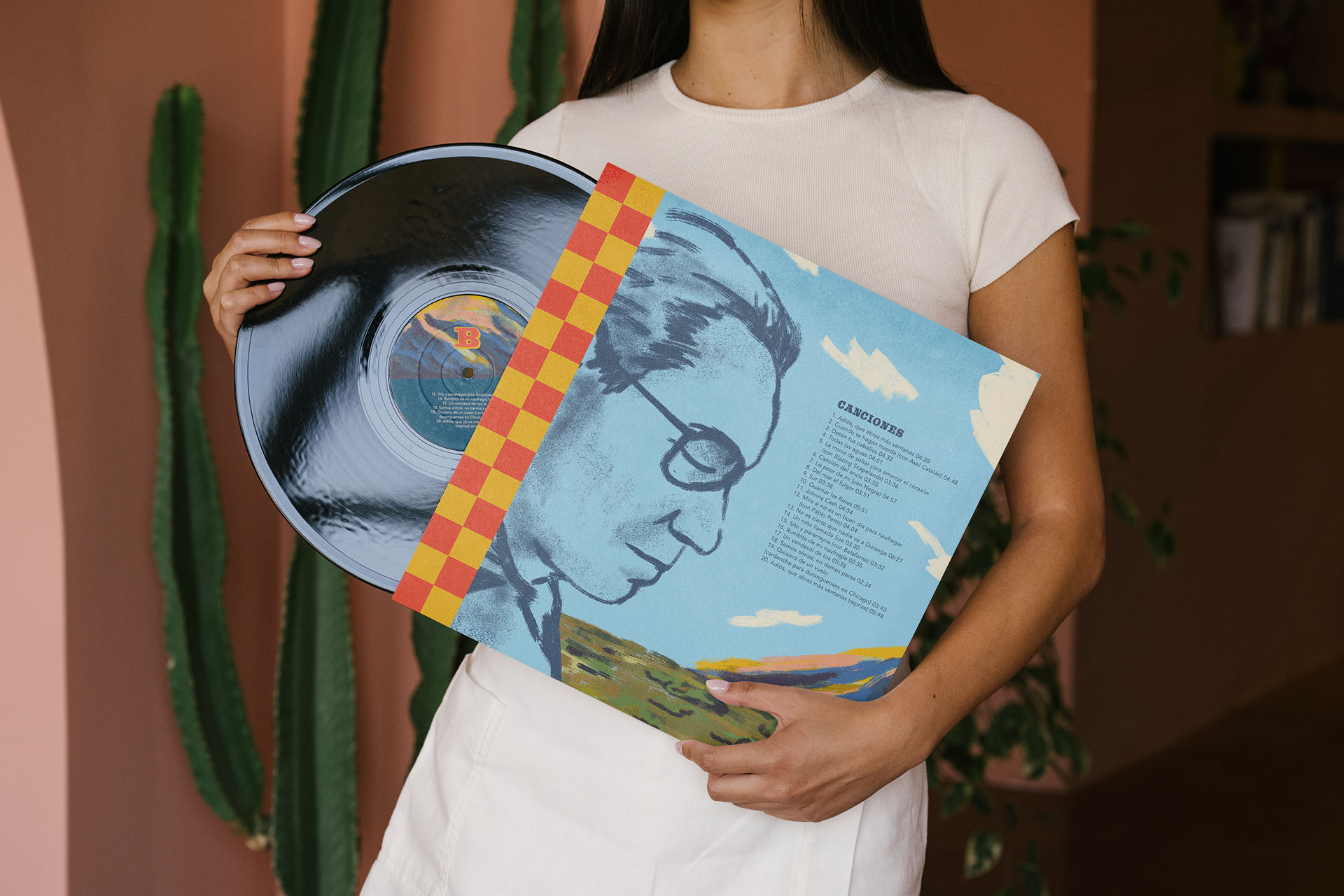
The back cover shifts perspective with a large, sketched profile portrait, referencing iconic images of Johnny Cash and Bob Dylan. The face is more present but still incomplete, keeping it from becoming the focal point.
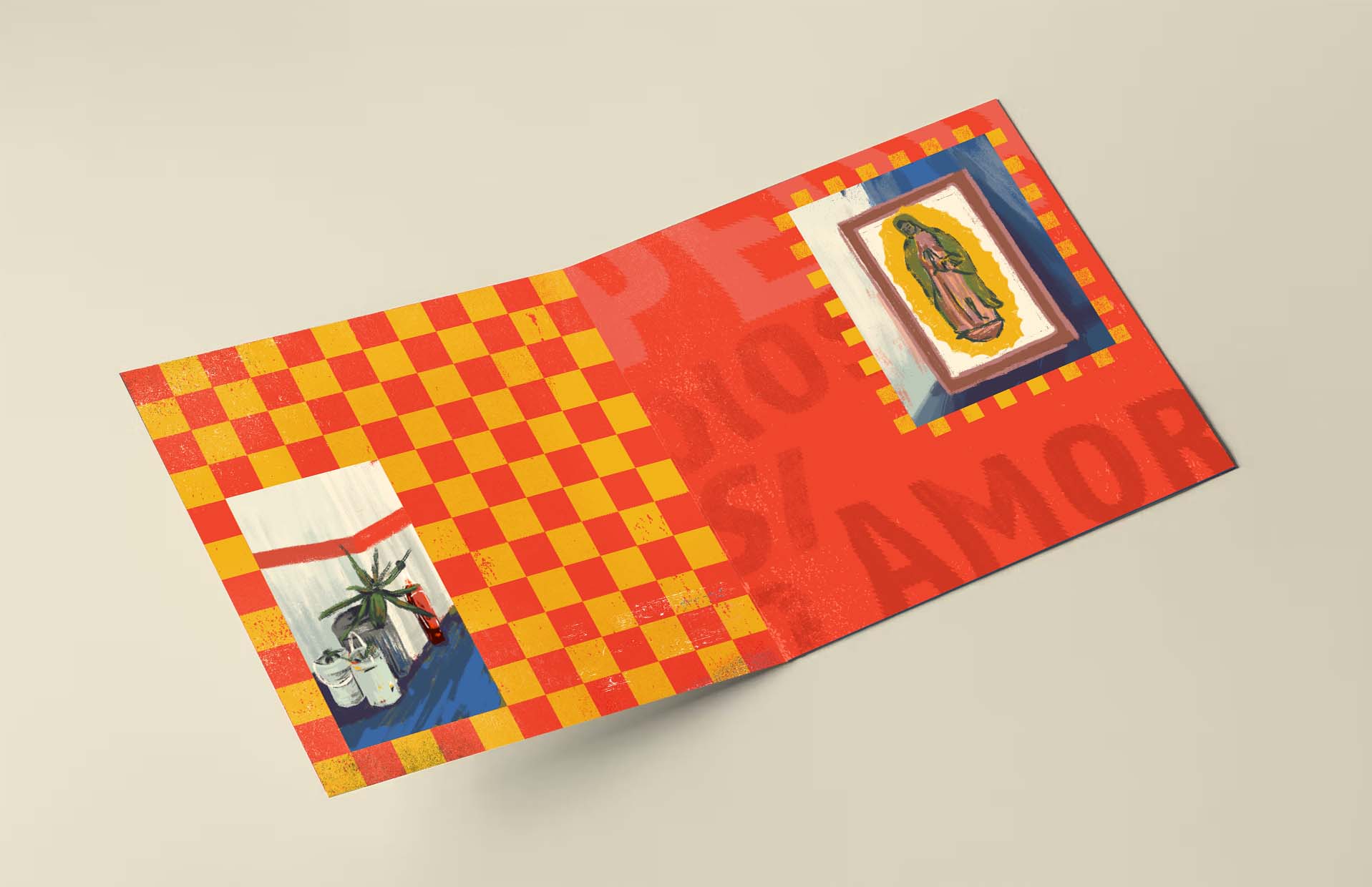
Opening the album reveals the interior world: a red and yellow checkered pattern drawn from the tile floors of traditional Durango homes, with painted fragments, a whiskey bottle, a plant, the Virgin of Guadalupe, and ghost words from his lyrics: "peor," "dios," "amor." Sacred and profane, coexisting.
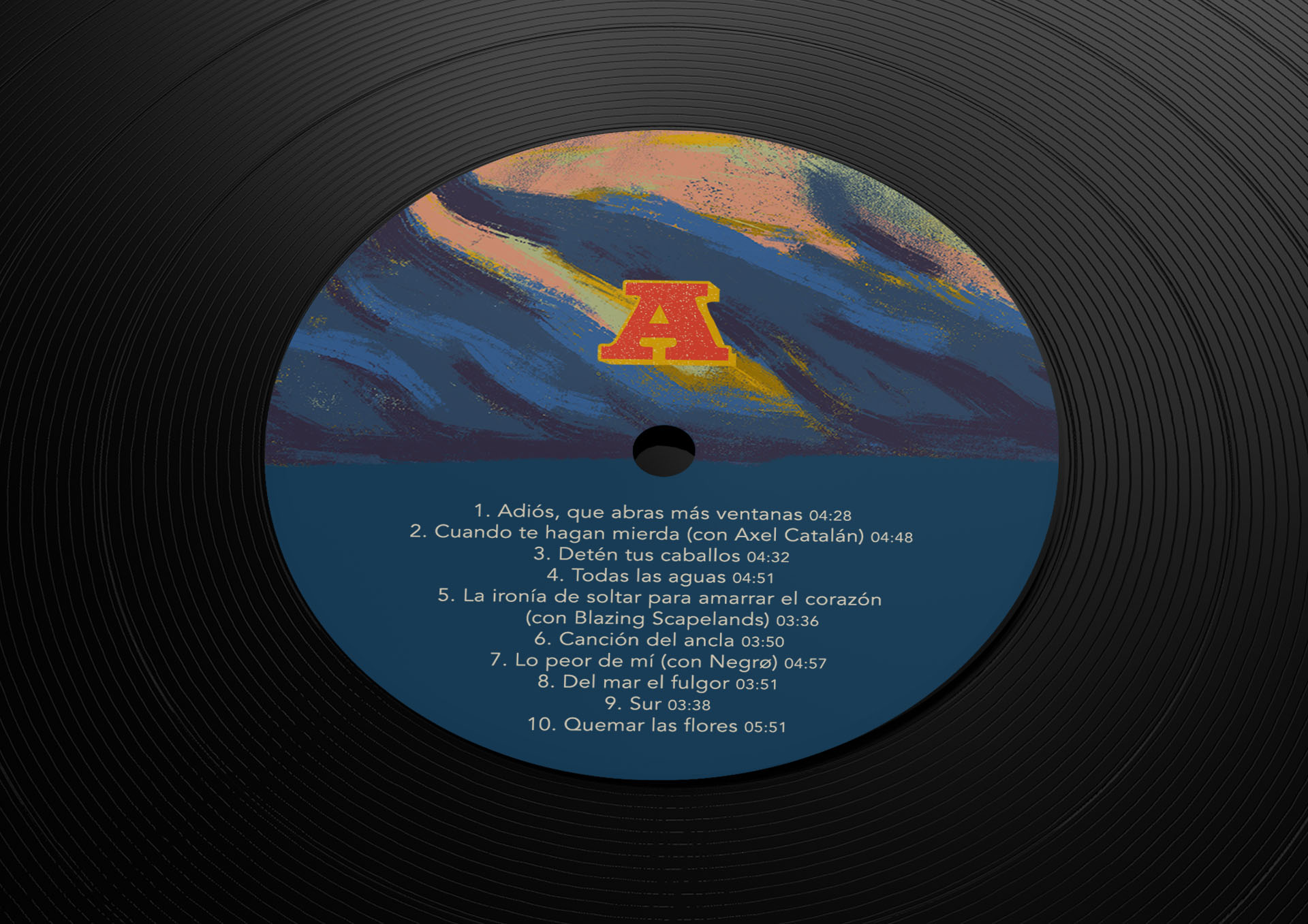
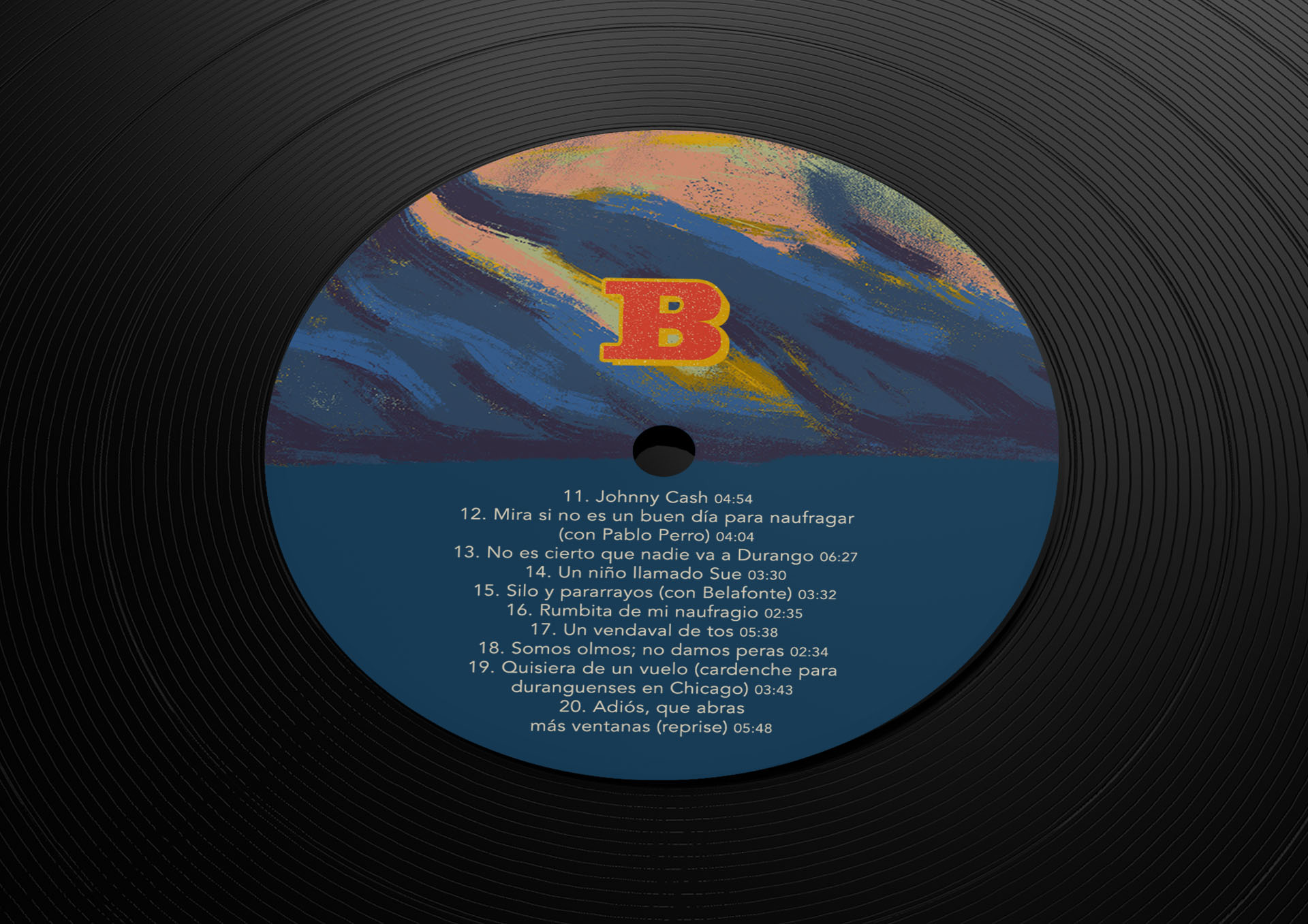
The vinyl labels extend the landscape of the cover, with hand-lettered A and B sides rooted in Northern Mexican typographic traditions.
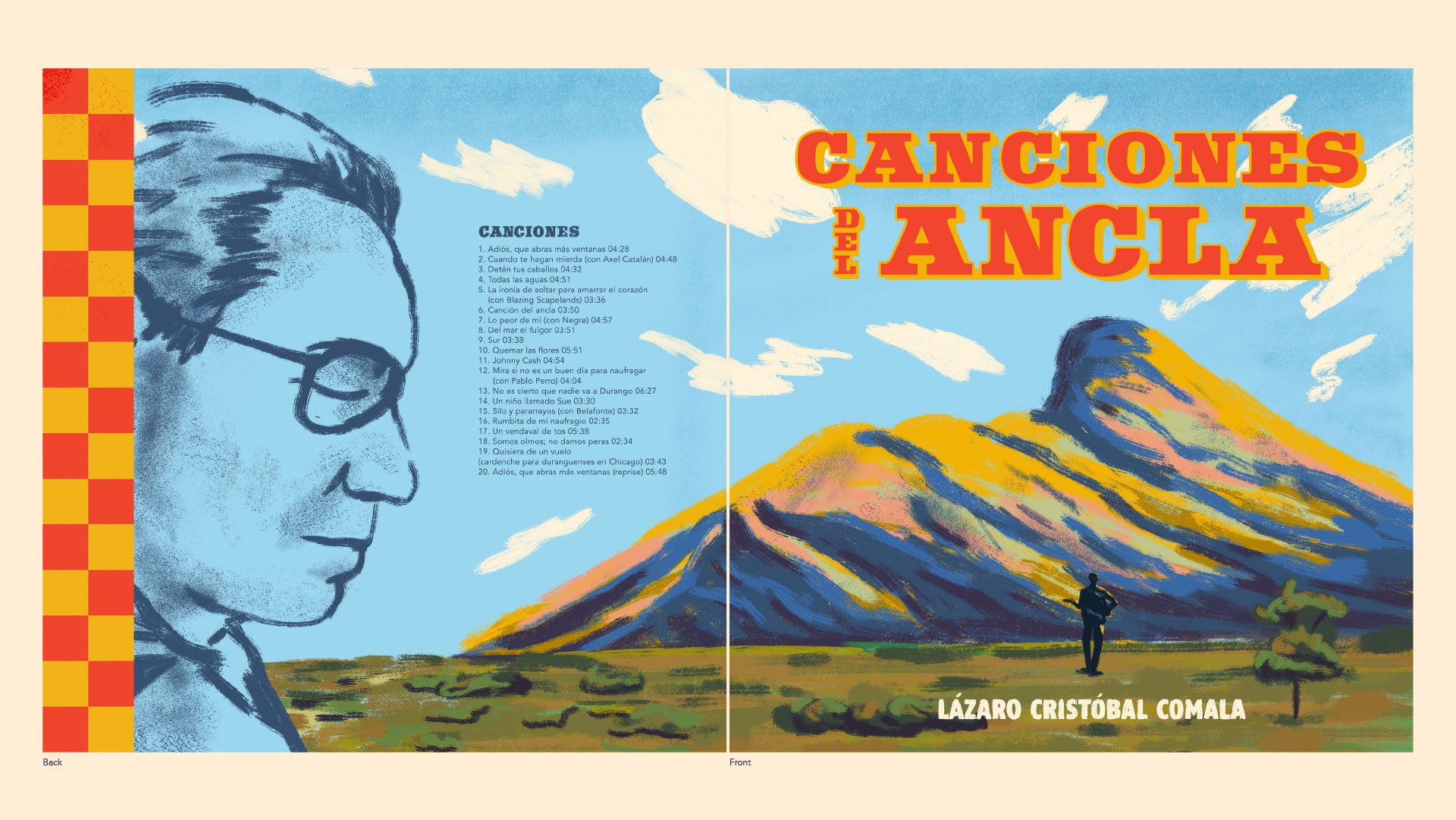
Front and back packaging design.